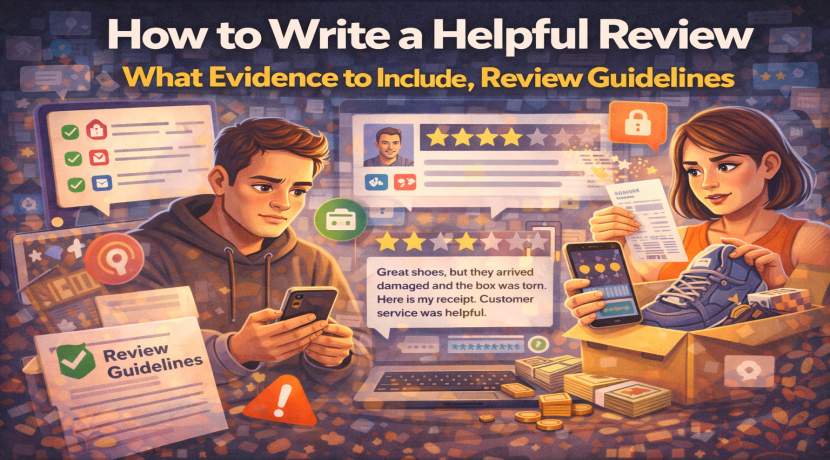
How to write a helpful review, what evidence to include, review guidelines
2026-Jan-14
A review is written quickly. One star. Five stars. “Bad service.” “Excellent.” Nothing else. The writer feels done. The reader learns nothing. The brand learns nothing. The platform fills up with noise that looks like information.
Most reviews fail not because the reviewer is dishonest, but because they mistake reaction for evidence. A helpful review is not a verdict. It is a record. It tells a stranger what happened, how it happened, and what to expect if they walk the same path.
In places where formal protection is weak, reviews carry weight they were never designed to carry. They become warnings. They become recommendations. They become substitute institutions. People read them not for emotion, but for foresight. They are trying to avoid loss. They are trying to predict risk. Vague feelings do not help them do that.
A helpful review begins with context. What was bought. When it was bought. Where the interaction took place. Online or in person. Paid upfront or on delivery. These details anchor the story. Without them, readers cannot tell whether the experience applies to them or not. Context turns a personal complaint into shared information.
Specific actions matter more than adjectives. Saying a seller is “rude” means little. Saying the seller stopped responding after payment, delayed delivery for seven days, or refused a refund explains everything. Describing what happened allows readers to judge for themselves. It also protects the reviewer. Facts are harder to dismiss than emotions.
Evidence strengthens credibility. Screenshots of receipts. Order confirmations. Delivery messages. Transaction references. Dates. Times. Not everything needs to be uploaded publicly, but referencing that evidence exists changes how the review is read. It signals seriousness. It separates frustration from fabrication. It tells the platform and the brand that this is not noise.
Tone matters more than people admit. Angry reviews feel justified to write, but they are easy to ignore. Calm reviews travel further. They are read longer. They are trusted more. This does not mean hiding harm. It means describing it without exaggeration. When the facts are bad, they speak loudly on their own.
Balance builds trust. If something worked before it failed, say so. If the issue was resolved eventually, note how. Reviews that acknowledge complexity feel honest. They show the reader that the writer is not trying to punish, only to inform. This makes the warning stronger, not weaker.
Guidelines exist for a reason. Avoid personal attacks. Avoid threats. Avoid speculation about intent. You cannot know what someone planned. You can only report what happened. Stick to your experience. One transaction. One interaction. This protects both the reviewer and the integrity of the platform.
Helpful reviews think beyond the self. They answer the question every reader is silently asking. Would this happen to me. Under what conditions. With what warning signs. A good review does not say “avoid this place.” It explains why avoidance might be wise.
Reviews are not revenge. They are contribution. They shape incentives. They reward good behavior and expose bad patterns. When written carefully, they reduce harm for people you will never meet. When written carelessly, they add confusion to an already noisy system.
In environments where enforcement is slow and resolution is uncertain, clarity becomes a form of care. Writing a helpful review is not about being loud. It is about being useful. It is about leaving a map instead of a shout.
Comments
Comments are reviewed before they appear publicly.
Sign in to leave a comment.
Sign inNo comments yet. Be the first to leave one.