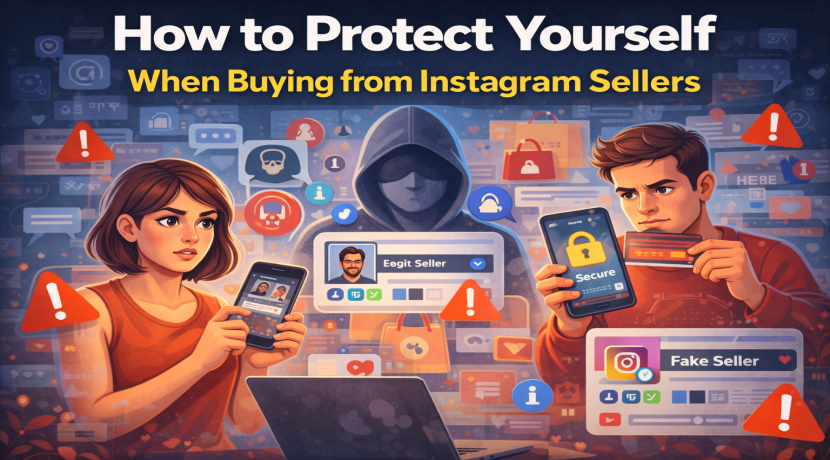
How to Protect Yourself When Buying from Instagram Sellers: A Complete Safety Guide
2026-Jan-24
Instagram has transformed from a photo-sharing app into a thriving marketplace where millions of transactions happen daily. The platform's intimate nature—direct messages, real faces, personal interactions creates a shopping experience that feels more like chatting with a friend than conducting business. But this same intimacy that makes Instagram commerce so appealing also exposes buyers to significant risks.
Unlike traditional e-commerce platforms with buyer protection programs, payment systems, and dispute resolution processes, Instagram offers no safety net. Once your money leaves your account through a direct transfer, the platform cannot help you recover it. This reality means that protecting yourself isn't just advisable—it's entirely your responsibility.
After observing countless Instagram transactions, successful purchases, and unfortunate scams, I've identified the critical steps every buyer needs to take. This guide draws from real experiences to help you navigate Instagram commerce safely without sacrificing the convenience that makes it attractive in the first place.
Understanding Instagram's Limitations as a Marketplace
Instagram was built for content sharing, not commerce. The platform added shopping features later, but these tools remain limited compared to dedicated marketplaces. When you buy from an Instagram seller, you're essentially conducting a peer-to-peer transaction with minimal infrastructure supporting it.
The platform cannot hold funds in escrow. It doesn't verify seller identities beyond basic account authentication. It has no formal dispute resolution system for transactions that go wrong. Reporting a fraudulent account might get it removed, but removal doesn't return your money. The account simply disappears, often to reappear under a new name.
This structural weakness means prevention must do all the work. Every precaution you take before sending payment determines your outcome. Everything that happens afterward is just damage control with limited options.
Verifying Seller Identity
A professional-looking Instagram page tells you almost nothing about seller legitimacy. High follower counts can be purchased. Polished product photos can be stolen from legitimate businesses. Glowing testimonials in story highlights can be fabricated. On Instagram, creating a convincing facade costs very little money and even less time.
Real verification requires examining consistency over time. Look at the seller's posting history across months, not just recent content. Does the account show a coherent business narrative? Has it maintained the same product category, pricing approach, and location signals throughout its existence? Sudden shifts in focus—an account that sold electronics last month but now offers luxury handbags—signal potential account repurposing or takeover.
Check the seller's engagement patterns. Do they respond to comments publicly? Do customer questions in their comment sections get answered? Legitimate sellers typically maintain visible communication with their audience because their reputation matters beyond individual sales.
Compare what the seller says in posts versus what they tell you privately. Inconsistencies in pricing, product details, or availability between public content and direct messages warrant serious caution. Scammers often use public posts to appear legitimate while running different schemes through private conversations.
Demanding Live Verification Before Payment
One of the most effective protection strategies costs nothing: requesting live proof of product existence. Ask the seller for a brief video call showing the actual item they're selling. Not a pre-recorded video. Not a story repost from another source. A live interaction where they can show you the product and respond to your specific requests in real time.
During this verification, ask them to display today's date written on paper next to the item, or to say your name while showing the product. These simple requests are effortless for legitimate sellers but create immediate problems for scammers who don't actually possess what they're advertising.
Pay attention to how sellers respond to verification requests. Real sellers typically accommodate these requests quickly because they understand buyer caution. They might even appreciate that you're a thoughtful customer. Fraudulent sellers, however, respond with deflection and manufactured urgency.
They'll claim their phone camera is broken. They'll say they're traveling and can't access the item right now. They'll tell you another buyer is waiting and you need to pay immediately to secure the product. These responses transform your reasonable request into pressure on you to abandon your caution. That pressure itself becomes evidence of risk.
Testing Physical Business Presence
Geography creates accountability. Ask sellers if you can pick up the item in person, even if you actually plan to have it delivered. A legitimate seller operating a real business will provide a physical location. They might explain why pickup isn't their preferred method, but they'll give you an address or meeting point.
Sellers who refuse any physical interaction—who insist that delivery is the only option without explaining why—raise immediate red flags. Some legitimate businesses do operate purely through delivery, particularly in certain product categories or regions. But complete unwillingness to anchor the transaction anywhere in physical space significantly increases your risk.
If a seller provides a location, verify it makes sense. Cross-reference the address with their stated business operations. Does a supposed furniture seller operate from a residential apartment in a way that seems impractical? Does their claimed warehouse location match the shipping patterns they describe?
You can also ask for their business registration details or tax identification if you're making a significant purchase. Legitimate businesses operating at scale typically have formal registration. Sellers who react defensively to this request or claim they're "too small" to have registration might be operating informally, which affects your recourse options if problems arise.
Structuring Payment to Minimize Risk
How you pay determines how much you can lose. Full payment upfront to a seller you've never transacted with before represents maximum exposure with minimum protection. If you're committed to buying from a new seller, structure the transaction to limit your risk.
Cash on delivery remains one of the safest approaches for Instagram purchases. You inspect the product before releasing payment, which forces sellers to actually deliver what they promised. Many sellers prefer upfront payment, but legitimate ones often accommodate COD for first-time buyers who ask.
If the seller requires advance payment, propose a partial deposit instead of full payment. Pay enough to show commitment but retain enough to incentivize proper delivery. This approach gives you some leverage if issues arise.
Consider the payment method carefully. Bank transfers and mobile money transfers offer no buyer protection. Once sent, that money is gone unless the recipient voluntarily returns it. Payment platforms with buyer protection—while rare for Instagram transactions—provide significantly more security when available.
Some Instagram sellers now accept payment through platforms that offer purchase protection. These transactions cost slightly more in fees, but those fees buy you actual recourse if the seller fails to deliver. The small additional cost often proves worthwhile for expensive items.
Before sending any payment, make a clear-headed decision about whether you can afford to lose the entire amount. This isn't pessimism—it's realistic risk assessment. If losing the money would create financial hardship, the purchase is too risky regardless of how legitimate the seller appears.
Creating Documentation Throughout the Process
Evidence becomes invaluable when transactions go wrong. Screenshot everything: product descriptions, stated prices, delivery promises, payment confirmations, and all message exchanges with the seller. Don't wait until problems emerge—collect this documentation during the normal course of the transaction.
Written records transform vague disputes into specific claims. They show what was promised versus what was delivered. They establish timelines that matter for chargebacks or legal action. They provide proof when sellers deny previous statements or change their stories.
Save all payment receipts and transaction references. Note the exact date and time of each payment. If you're making multiple payments, track each one separately. This financial documentation proves how much you paid and when, which becomes critical if you need to pursue recovery.
For expensive purchases, consider having the seller confirm key details through video message rather than just text. A video where they describe the product specifications, delivery timeline, and price creates stronger evidence than written messages that could later be disputed.
Recognizing Warning Signs in Seller Behavior
Scammers follow patterns. Learning to recognize these patterns protects you across all transactions, not just single purchases. Pay attention to how sellers communicate and what behaviors emerge as you ask questions or request verification.
Excessive politeness can mask deception. Scammers often use respectful language, religious references, and formal courtesy to build false trust. They mirror your communication style to create rapport. None of this indicates honesty—it indicates sales technique. Legitimate sellers can be polite, but politeness alone proves nothing about their reliability.
Defensiveness in response to reasonable questions signals problems. When you ask for verification, delivery details, or product specifications, legitimate sellers provide straightforward answers. They understand that informed buyers make better customers. Sellers who respond to questions with irritation, accusations of distrust, or suggestions that you should buy elsewhere are protecting something they don't want examined.
Manufactured urgency represents one of the most reliable scam indicators. Claims that "another buyer is waiting," "this is the last one available," or "the price increases tomorrow" are pressure tactics designed to prevent you from thinking clearly. Real scarcity exists, but scammers weaponize urgency to bypass your verification process.
Inconsistent communication patterns also warrant attention. Does the seller respond instantly to payment questions but slowly to product detail questions? Do they give thorough answers about pricing but vague answers about delivery? These patterns suggest their priority is getting your money, not ensuring you receive the right product.
Building Trust Incrementally Through Small Transactions
Trust in Instagram commerce shouldn't be given—it should be earned through demonstrated reliability. The safest approach to any new seller involves starting small and scaling up based on their performance.
Make your first purchase something inexpensive enough that potential loss won't hurt significantly. This test transaction reveals how the seller operates when there's actual money involved. Do they deliver on time? Is the product as described? How do they communicate after receiving payment?
Observe the entire transaction cycle, not just whether the product arrives. Did they provide tracking information? Did they respond to questions during delivery? Did they follow up after delivery to ensure satisfaction? These behaviors indicate whether they're building a long-term business or just closing individual sales.
If the first transaction succeeds, consider a second purchase at a slightly higher value. This pattern lets you build confidence gradually rather than risking significant amounts based on assumptions. Many successful Instagram buyers maintain relationships with verified sellers they've tested this way, eventually making large purchases with confidence based on established track records.
Never let a seller's request for immediate full trust override this incremental approach. Sellers who demand large upfront purchases from new customers are asking for something they haven't earned. Legitimate businesses understand that trust develops through positive experiences over time.
Knowing When to Walk Away
The ability to abandon a potential purchase represents your strongest protection. Missing out on a good deal costs nothing. Losing money to a scam costs both financially and emotionally. When something feels wrong, trust that instinct over the fear of missing an opportunity.
If a seller refuses basic verification, walk away. If they pressure you to pay immediately without allowing time for consideration, walk away. If their answers to straightforward questions are evasive or inconsistent, walk away. If the deal seems dramatically better than what legitimate sellers offer, walk away.
Sometimes buyers convince themselves that warning signs don't apply to their situation. They rationalize that this particular seller is trustworthy despite concerning behaviors because the product is exactly what they want or the price is too good to pass up. This rationalization is how scams succeed.
Scammers count on desire overwhelming caution. They select products that generate emotional responses—limited items, trending products, significant discounts on luxury goods. They know that when you want something badly enough, you'll talk yourself into ignoring red flags.
Discipline in Instagram commerce means accepting that some opportunities aren't worth the risk. The platform will always have more sellers and more products. The specific item you're considering right now is rarely so unique that you must buy it from a questionable seller.
Final Thoughts
Instagram commerce offers convenience and personal connection that traditional online shopping often lacks. These benefits make the platform attractive for buying everything from handmade crafts to electronics. But these same benefits create vulnerability when sellers exploit the trust that personal interaction generates.
Protecting yourself requires recognizing that you're operating without safety nets. Instagram won't save you from bad decisions. The platform provides the space for commerce but not the protection. That protection must come from your own careful approach to verification, payment structure, and seller evaluation.
The strategies outlined here—demanding live verification, testing seller claims about physical presence, structuring payment to limit exposure, documenting everything, recognizing behavioral warning signs, building trust incrementally, and maintaining the discipline to walk away—form a comprehensive defense against Instagram commerce risks.
These practices don't eliminate all risk. Determined scammers constantly evolve their approaches, and some fraudulent sellers are sophisticated enough to pass initial scrutiny. But these methods dramatically reduce your vulnerability by forcing sellers to demonstrate legitimacy through actions rather than just words.
Successful Instagram buying comes down to patience overriding urgency and verification preceding trust. When you maintain these priorities, you can access the genuine value the platform offers while avoiding the costly mistakes that trap less cautious buyers.
Comments
Comments are reviewed before they appear publicly.
Sign in to leave a comment.
Sign inNo comments yet. Be the first to leave one.