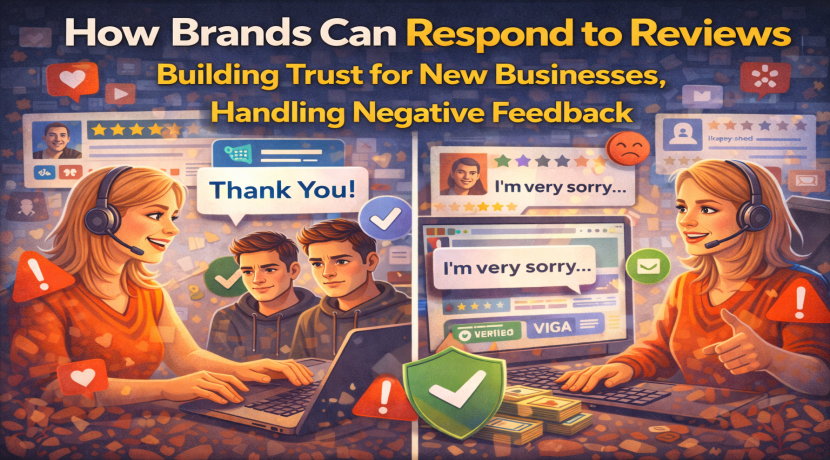
How brands can respond to reviews, building trust for new businesses, handling negative feedback
2026-Jan-24
A customer leaves a review. It is short. It is blunt. Sometimes it is angry. Sometimes it is tired. “No response.” “Delayed delivery.” “Would not recommend.” The brand sees it and hesitates. Should we reply. Should we ignore it. Should we explain. Should we defend ourselves. Most businesses get this wrong, not because they are careless, but because they misunderstand what reviews are actually doing. Reviews are not verdicts.
They are public negotiations of trust. In Ghana, trust is not assumed. It is earned repeatedly, in public, under pressure. People do not read reviews to find perfect brands. They read reviews to see how brands behave when something goes wrong. Silence already answers the question they are asking, and it rarely answers it in your favor.
New businesses feel this more sharply than established ones. A young brand can have a solid product, fair pricing, and good intentions and still struggle because it lacks social proof. In an environment where institutions do not consistently protect consumers, people outsource trust to other people. Reviews become references.
Comment sections become background checks. A brand page with unanswered reviews looks unfinished, even if the service behind it is strong. Ignoring reviews can feel calm, professional, even dignified from inside the business. From the outside, customers read it differently. They see avoidance. Or arrogance. Or absence. In a fragile trust environment, absence is expensive.
When negative reviews appear, the instinct is to defend. To explain the delay. To blame the courier. To correct the customer. To quote policy. To prove that the brand is right. This instinct feels logical. It is also destructive. A review response is not written for the reviewer alone. It is written for everyone else watching. The public does not care who is technically correct. They care who sounds human, accountable, and present. The fastest way to lose trust is to sound like a policy document arguing with a person who feels wronged.
The most effective responses begin with acknowledgment, not performance. Not apology theater. Not dramatic regret. Simple recognition. “We see the issue.” “This should not have happened.” “We missed this.” Acknowledgment signals attention. It tells future customers that problems do not disappear into silence. It shows that someone is at the wheel. From there, brands should avoid absolutes and excuses.
Saying “this never happens” or “no other customer complained” or “that is not how we operate” protects ego, not trust. If something happened once, people know it can happen again. They are not asking for perfection. They are watching for honesty. What matters next is clarity. A clear next step. A private follow up. A refund process. A replacement timeline. A support channel that actually exists. Specificity builds confidence. Vague promises feel like delay dressed up as politeness.
Some reviews are unfair. Some are inaccurate. Some come from people who never bought anything at all. This does not remove the need to respond. Silence in these cases looks like guilt. Aggression looks like insecurity. The middle path is calm correction. State the facts briefly. Keep the tone neutral. Invite verification. “We cannot find a record of this transaction. Please contact us so we can investigate.”
That sentence protects the brand and signals fairness at the same time. The audience watching understands that not every complaint is legitimate. What they want to see is whether the brand is willing to engage without losing composure.
Positive reviews matter just as much, and many brands waste them. Responding only to complaints creates the impression that the brand shows up only when cornered. Simple responses to positive feedback reinforce credibility. “Thank you for trusting us.” “We appreciate the feedback.” “Glad the service worked for you.” Over time, these replies form a visible pattern. That pattern becomes reputation. People do not count star ratings alone. They read tone. They look for consistency. They notice whether a brand sounds the same when praised and when criticized.
Deleting reviews feels like control, but it reads as fear. When negative feedback disappears, customers assume one of two things. Either the brand is hiding something or the platform cannot be trusted. Neither assumption helps you. A visible complaint paired with a thoughtful response builds more confidence than a flawless page with no tension. Trust grows in the open. It grows where mistakes are acknowledged and handled, not erased.
In Ghana, relationships often replace systems, and reviews function the same way. They are not decoration. They are infrastructure. They tell customersITYPE? Let's correct: They tell customers how problems are handled, how power is used, how disagreement is treated. A brand that responds consistently, calmly, and clearly trains people to believe that their money will not vanish into silence after payment. This is not marketing. It is behavior.
Responding to reviews is work. Emotional work. Public work. It requires restraint, humility, and repetition. It requires resisting the urge to win arguments and choosing instead to reassure strangers you will never meet. But the alternative is worse. Being talked about without being present. In markets where enforcement is weak and promises are cheap, presence becomes proof. People do not expect perfection. They expect effort that shows.
Do not respond to win. Respond to reassure. Do not perform innocence. Demonstrate responsibility. Do not hide mistakes. Show how they are handled.
Blessed are the brands that reply, for trust will follow them. Cursed are the silent ones, for the public is already deciding.
Comments
Comments are reviewed before they appear publicly.
Sign in to leave a comment.
Sign inNo comments yet. Be the first to leave one.